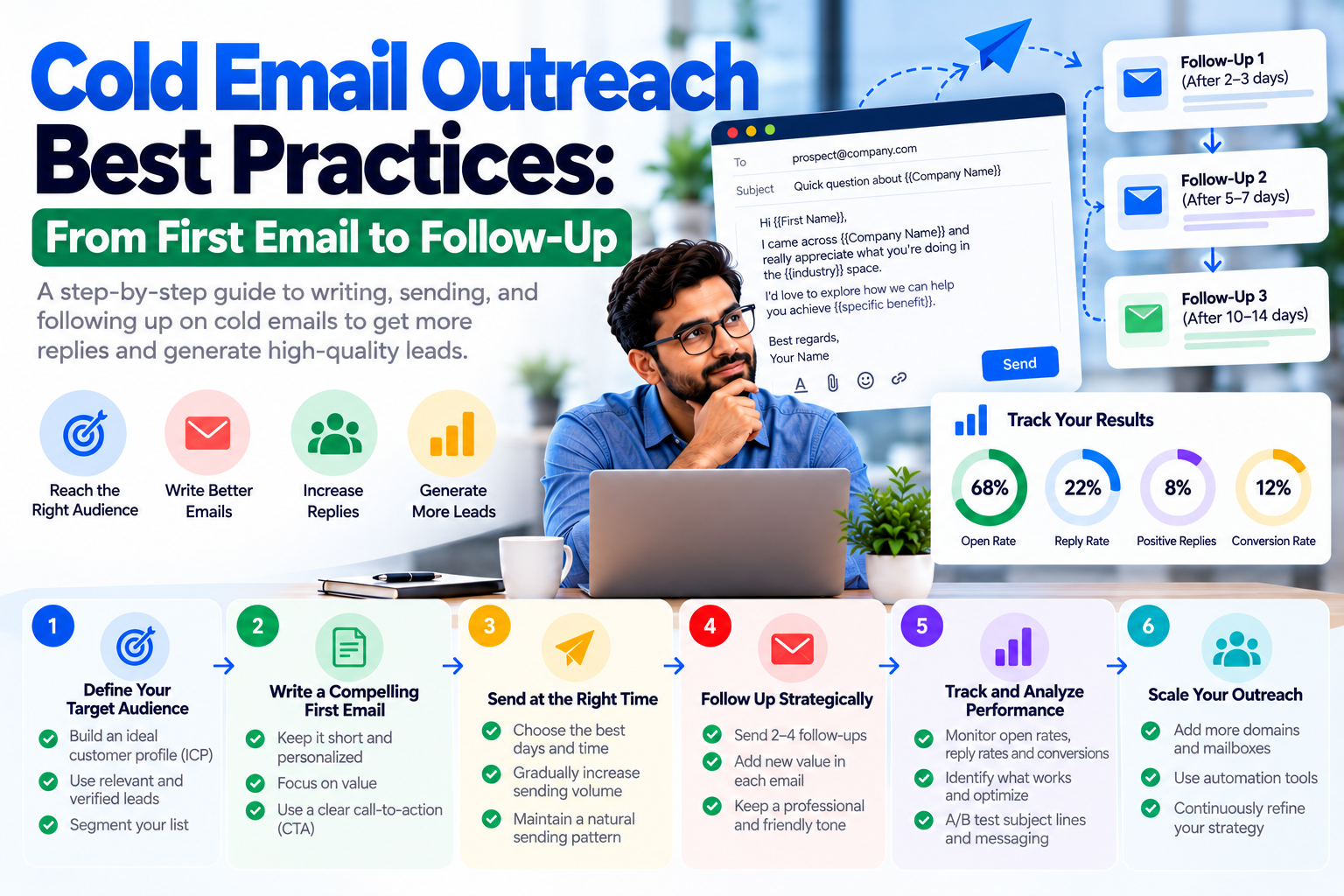
Cold Email Outreach Best Practices: From First Email to Follow-Up
Cold email outreach can help businesses create new B2B conversations, generate sales opportunities, introduce services, and build partnerships. However, successful outreach requires more than sending an email to a large contact list.
The best campaigns combine relevant targeting, strong messaging, reliable infrastructure, appropriate follow-ups, and continuous measurement.
Start With a Relevant Audience
Before writing an email, identify who should receive it.
Businesses should define their ideal prospect based on factors such as industry, company size, location, job role, business requirements, and potential fit.
A highly relevant audience gives the campaign a stronger foundation.
Sending the same message to unrelated businesses can result in low engagement and unnecessary complaints.
Write a Clear Subject Line
The subject line is one of the first things a recipient sees.
It should accurately represent the purpose of the email without using misleading claims or excessive promotional language.
A short and relevant subject line can make it easier for the recipient to understand what the message is about.
Keep the First Email Short
Cold prospects generally do not need a long company presentation in the first email.
A useful structure is:
- Introduce yourself or your company.
- Explain why you are contacting the recipient.
- Mention the relevant business problem or opportunity.
- Briefly explain how you can help.
- Provide a simple call to action.
The objective is usually to begin a conversation rather than communicate every detail about the company.
Personalize Where It Matters
Personalization can make an outreach email more relevant.
For example, an agency contacting an e-commerce company might reference the prospect’s industry or a specific business requirement.
However, personalization should be accurate.
Incorrect information can make an email look automated and reduce trust.
Create a Useful Call to Action
The recipient should understand what you would like them to do next.
The call to action could be a short reply, a meeting request, or another appropriate business action.
Avoid presenting too many different options in the same email.
Build a Follow-Up Sequence
Many prospects will not respond to the first message.
A follow-up sequence can provide additional opportunities to engage.
Each follow-up should have a purpose. It could clarify the original message, provide additional information, answer a likely question, or offer a simple way to continue the conversation.
If someone does not want further communication, businesses should respect that preference.
Monitor Your Results
Cold email campaigns should be measured.
Useful metrics can include:
- Delivery rate
- Bounce rate
- Reply rate
- Positive response rate
- Meetings generated
- Conversion rate
- Complaint rate
These metrics can reveal whether problems are related to targeting, messaging, data quality, or technical infrastructure.
Protect Email Deliverability
Even a strong campaign can struggle if the underlying email infrastructure is poorly configured.
Businesses should configure SPF, DKIM, and DMARC appropriately and monitor their domains and mailboxes.
They should also maintain clean contact data and avoid sending irrelevant or excessive messages.
Respect Email Regulations and Platform Policies
Businesses should understand the email marketing and privacy requirements that apply to their target markets.
Depending on the country, audience, and purpose of communication, different legal requirements may apply.
Organizations should also follow the policies of their email providers and outreach platforms.
Responsible outreach protects both the business and the recipient experience.
Use Professional Infrastructure
For businesses running regular B2B outreach, professional infrastructure can simplify management.
TechFuse MarkTech provides email infrastructure and technical services including business email, server email solutions, Google Workspace administration, domain configuration, authentication, mailbox management, and outreach infrastructure support.
Our team can help businesses establish and manage the technical environment behind their email communication.
Final Thoughts
Successful cold email outreach is a combination of strategy and execution.
A relevant prospect list, clear messaging, personalization, useful follow-ups, accurate data, reliable infrastructure, and ongoing measurement can create a stronger foundation for B2B outreach.
The objective should not simply be sending more emails. It should be creating relevant business conversations while maintaining